Find Your Perfect Fit: Choosing a Capsule Filling Machine

Selecting a capsule filling machine can revolutionize your supplement production, boosting efficiency and accuracy by aligning output scale, fill material, and automation with your specific objectives. In this comprehensive guide, you'll discover the three primary machine types—manual, semi-automatic, and automatic—learn how to evaluate key decision factors like capacity, material compatibility, size, cost, and compliance, and gain insights into best practices for maintenance, troubleshooting, and sourcing dependable equipment. We'll also compare performance metrics, showcase leading products, and explore emerging innovations to help you make an informed purchase that supports your health-focused or business goals.
What Are the Different Types of Capsule Filling Machines?
Capsule filling machines streamline production by automating shell separation, precise dosing, tamping, and ejection, ensuring consistent fill weights across various batch sizes. The three main categories are:
- Manual capsule filling machines, which rely on hand assembly and powder distribution for meticulous small-batch production.
- Semi-automatic capsule filling machines, which mechanize the dosing process while retaining manual capsule loading for enhanced medium-volume output.
- Fully automatic capsule filling machines, which integrate separation, dosing, tamping, and ejection into a single, continuous operation for high-volume throughput.
Capsule Filling Machine Types
Capsule filling machines are broadly classified into manual, semi-automatic, and automatic types, each tailored to specific production scales and operational requirements. Manual machines are ideal for small batches, semi-automatic for moderate output, and automatic for high-volume production, offering a spectrum of choices to meet diverse operational objectives.
Capsule Filling Machines: A Comprehensive Guide
This categorization directly supports the article's introduction of different machine types and their suitability for various production volumes.
Each type offers a unique balance of cost, speed, and ease of use, making it crucial to examine manual options first.
What Is a Manual Capsule Filling Machine and Who Should Use It?

A manual capsule filling machine requires hands-on assembly of capsule shells and precise powder distribution, offering unparalleled control for low-volume batches. Small businesses, hobbyists, and research laboratories often favor these units due to their affordability (typically under $150), support for capsule sizes 000–5, and the ability to make exact ingredient adjustments.
- Precision Control: Fine-tune fill weight through visual inspection and manual tamping.
- Low Capital Investment: An excellent choice for startups and personal use.
- Portability: Lightweight ABS or stainless-steel construction ensures easy cleaning and storage.
- Labor-Intensive Operation: Output is limited to a few hundred capsules per hour.
- Manual Setup Required: Repetitive steps can slow down larger batch production.
These characteristics naturally lead to an exploration of semi-automatic systems, which enhance capacity with minimal additional cost.
How Do Semi-Automatic Capsule Filling Machines Work and When Are They Best?

Semi-automatic capsule fillers combine manual capsule separation with mechanized powder dosing to significantly boost productivity for moderate production runs. A gravity- or vibration-based dosing system precisely distributes powder into aligned capsule bottoms, after which an operator completes and ejects the filled shells.
- Increased Throughput: Capable of processing up to 6,000 capsules per hour.
- Balanced Cost: Represents a mid-range investment with a notable improvement in speed.
- Consistent Dosing: Mechanized distribution minimizes weight variations.
- Manual Loading Step: Operators are still responsible for handling capsule halves.
- Footprint and Power: Requires dedicated bench space and an electrical connection.
By automating the most time-consuming tasks, semi-automatic machines effectively bridge the gap between manual methods and full automation, guiding us toward an examination of fully automatic solutions.
What Are the Advantages of Automatic Capsule Filling Machines for Large-Scale Production?
Automatic capsule fillers fully mechanize capsule separation, dosing, tamping, and ejection, delivering high throughput and exceptional ±0.1 mg accuracy for batch sizes exceeding 20,000 capsules per hour. They are equipped with advanced features like tamping tools, in-line capsule sorters, and intuitive touch-screen controls.
- High Speed and Precision: Capable of processing up to 100,000 capsules per hour with minimal variation.
- Hands-Free Operation: Reduces labor requirements and minimizes the risk of errors.
- Integrated Quality Control: Vision systems are employed to detect empty or misfilled capsules.
- Significant Capital Outlay: Involves a higher initial cost and requires a larger maintenance budget.
- Larger Facility Requirements: Their footprint and utility demands exceed those of smaller machines.
Automatic systems are ideally suited for pharmaceutical and high-volume nutraceutical plants where consistency is paramount, setting the stage for selection based on critical decision factors.
What Key Factors Should You Consider When Choosing a Capsule Filling Machine?
Key decision factors encompass production capacity, material compatibility, capsule dimensions, budget, automation level, and safety features to ensure your chosen machine aligns with operational goals and regulatory expectations. Consider each factor carefully:
- Production Capacity and Scale
- Fill Material Compatibility
- Capsule Size and Composition
- Budget and Return on Investment
- Automation Level and Workflow Integration
- Safety Features and Maintenance Requirements
Balancing these elements will guide you toward the optimal capsule machine for your specific scope and budget.
How Does Production Capacity Influence Your Machine Choice?
Production capacity is the primary determinant of whether manual, semi-automatic, or automatic equipment best suits your output targets—ranging from a few hundred to over 100,000 capsules per hour.
| Machine Type | Output Range | Ideal Application |
|---|---|---|
| Manual | 100–300 capsules/hour | Home use, R&D, small batches |
| Semi-Automatic | 1,000–6,000 capsules/hour | Growing businesses, pilot runs |
| Fully Automatic | 20,000–100,000+/hour | Industrial, pharmaceutical |
Matching throughput to demand prevents over- or under-investing in capacity, ensuring smooth scaling and alignment with material compatibility requirements.
Which Fill Materials Are Compatible with Different Capsule Filling Machines?
Fill materials such as powders, granules, pellets, and certain liquids necessitate specific dosing and sealing mechanisms for accurate encapsulation. Common compatibility includes:
- Dry Powders and Granules: Suitable for all machine types equipped with vibration or tamping systems.
- Pellets and Micro-Granules: Best handled by semi-automatic and automatic machines featuring adjustable dosing discs.
- Oils, Suspensions, Micro-Emulsions: Require specialized liquid-filling attachments on semi-automatic or automatic units.
Understanding material flow characteristics is crucial for ensuring your machine delivers consistent fill weights and avoids cross-contamination when switching between formulations.
How Do Capsule Sizes and Types Affect Machine Selection?
Capsule size and composition dictate the necessary tooling and dosing precision. Common size options and materials include:
- Size Range 000–5: Larger sizes (000–00) accommodate higher fill volumes; smaller sizes (1–5) are suitable for low-dose compounds.
- Gelatin Capsules: Standard shells offering broad chemical compatibility.
- HPMC (Vegetarian) Capsules: Plant-based, heat-stable options preferred for vegan formulations.
- Pullulan Capsules: High-clarity, moisture-resistant shells designed for sensitive ingredients.
Your chosen machine must support the specific capsule dimensions and shell material to ensure accurate dosing and maintain long-term operational integrity.
What Budget Considerations Impact Your Capsule Filling Machine Investment?
Budget planning should encompass initial capital costs, ongoing operational expenses, spare parts, and maintenance to accurately calculate the total cost of ownership. Manual fillers are available for under $150, semi-automatic machines typically range from $1,000–$5,000, and fully automatic systems generally exceed $20,000. Remember to factor in:
- Consumables: Replacement parts, seals, and dosing discs.
- Utilities: Power requirements for semi-automatic and automatic units.
- Maintenance: Scheduled servicing and essential cleaning protocols.
- Return on Investment: Potential labor savings and increased throughput.
A well-defined budget framework ensures your acquisition aligns with your long-term efficiency targets.
How Does Automation Level Affect Workflow and Ease of Use?
The level of automation significantly influences labor allocation, the complexity of training required, and integration into existing production lines.
- Manual Machines: Feature simple training requirements and minimal technical support needs.
- Semi-Automatic Machines: Require moderate training focused on dosing systems and cleaning procedures.
- Automatic Machines: Demand advanced operator training, proficiency with programmable controls, and integration capabilities with ERP or MES systems.
Selecting the appropriate automation level ensures a seamless workflow that maximizes productivity while minimizing operational downtime.
How Important Is Regulatory Compliance When Choosing a Capsule Filling Machine?
Regulatory compliance is critical to ensure your equipment adheres to hygiene, safety, and quality standards mandated by authorities like the FDA and ICH, thereby protecting end-users and product integrity. Key compliance areas include:
- Good Manufacturing Practices (GMP)
- FDA Sanitary Design and Materials Certification
Adhering to these standards is essential before delving into maintenance protocols.
What Are Good Manufacturing Practices (GMP) and Why Do They Matter?
Good Manufacturing Practices (GMP) establish design, cleaning, documentation, and validation requirements for equipment to prevent cross-contamination and ensure batch consistency. Compliance with GMP:
- Guarantees Hygiene: Ensures compatibility with cleanroom environments and the use of sanitizable surfaces.
- Ensures Traceability: Requires meticulous batch records and calibration logs.
- Protects Consumer Safety: Minimizes the risk of contamination.
Good Manufacturing Practices (GMP)
Good Manufacturing Practices (GMP) are essential for ensuring the quality and safety of pharmaceutical products. GMP guidelines cover design, cleaning, documentation, and validation requirements for equipment to prevent cross-contamination and ensure batch consistency, which is critical for regulatory compliance.
U.S. Food and Drug Administration, Guidance for Industry: Current Good Manufacturing Practice (CGMP) Regulations
This citation supports the article's discussion on the importance of GMP in the context of regulatory compliance for capsule filling machines.
Meeting GMP requirements lays the groundwork for meeting specific regulatory certifications.
What FDA Guidelines and Certifications Should You Look For?
FDA guidelines specify approved construction materials—such as 316L stainless steel and food-grade plastics—and require equipment listing under 21 CFR Part 11 for computerized controls. Look for:
- FDA Listing: Equipment materials certified for direct contact with pharmaceuticals.
- ISO 13485 Certification: Demonstrates compliance with quality management system standards for medical devices.
- CE Marking: Indicates conformity with European health, safety, and environmental protection standards.
These certifications signal machine reliability and market acceptance, leading into a discussion of proper maintenance practices.
How Can You Maintain and Extend the Life of Your Capsule Filling Machine?
Implementing regular maintenance and cleaning protocols is key to preventing component wear, maintaining dosing accuracy, and upholding regulatory compliance throughout the machine’s service life. Core practices include:
- Scheduled disassembly and thorough inspection
- Use of approved cleaning agents and adherence to strict procedures
- Preventive replacement of seals and wear parts
Starting with a focus on cleaning procedures establishes a solid foundation for troubleshooting common issues.
What Are the Best Cleaning Procedures for Capsule Filling Machines?
Effective cleaning procedures involve disassembling all contact parts, sanitizing with FDA-compliant detergents, and verifying the absence of any residue. Recommended steps include:
- Carefully remove dosing discs, tamping pins, and hopper components.
- Soak parts in a warm, non-abrasive detergent solution.
- Rinse thoroughly with purified water and allow parts to air-dry completely.
- Inspect sealing surfaces meticulously and reassemble with lubricated O-rings.
Rigorous cleaning is essential for preventing cross-contamination and extending component lifespan, which directly impacts troubleshooting effectiveness.
How Do You Troubleshoot Common Capsule Filling Machine Issues?
Common issues such as inconsistent fill weight, capsule jams, and misalignment can be effectively resolved through systematic inspection and precise adjustment:
- Inconsistent Fill Weight: Recalibrate the dosing disc speed or adjust the vibration amplitude.
- Capsule Jams: Verify the hopper feed rate and clear any obstructions in the chute.
- Misalignment: Realign the mould plates and replace any worn guides.
Proactive troubleshooting safeguards operational uptime and maintains consistent production quality, setting the stage for a broader comparison of machine types.
How Do Manual, Semi-Automatic, and Automatic Capsule Filling Machines Compare?
A comparative analysis of manual, semi-automatic, and automatic capsule filling machines reveals distinct differences in speed, accuracy, capacity, and cost-effectiveness, catering to varied production needs. This comparison is vital for small-business decisions and material considerations.
What Are the Key Differences in Speed, Accuracy, and Capacity?
Manual, semi-automatic, and automatic systems exhibit significant variations in their performance metrics:
| Machine Type | Speed (Capsules/Hour) | Accuracy (± mg) | Best-Fit Scenario |
|---|---|---|---|
| Manual | 100–300 | 0.5–1.0 | Small-batch precision |
| Semi-Automatic | 1,000–6,000 | 0.3–0.5 | Medium production flexibility |
| Fully Automatic | 20,000–100,000+ | 0.1 | High-volume industrial |
Which Machine Type Offers the Best Value for Small Businesses?
Semi-automatic capsule fillers typically provide the best value for small businesses by striking an optimal balance between affordability, moderate throughput, and ease of operation. They require a minimal footprint, reduce manual labor by up to 70 percent, and achieve consistent fill weights, making them the preferred choice for growing supplement brands before they transition to full automation.
How Do Machine Materials and Build Quality Affect Durability?
Machine durability is fundamentally linked to the quality of construction materials and the precision of manufacturing processes.
- 316L Stainless Steel: Offers excellent corrosion resistance, is easy to sanitize, and is ideal for pharmaceutical environments.
- High-Grade ABS Plastic: Lightweight and cost-effective, suitable for manual and entry-level machines.
- Aluminum Alloys: Commonly used in dosing discs and hoppers to reduce weight and enhance wear resistance.
Selecting robust materials minimizes maintenance downtime and supports long-term regulatory compliance.
Where Can You Find Quality Capsule Filling Machines and Accessories?
High-quality capsule filling machines and complementary accessories are readily available through specialized suppliers who offer reliable equipment, essential replacement parts, and matching empty capsules to optimize your encapsulation workflow. Next, we'll highlight a popular manual option widely recognized for its exceptional value.
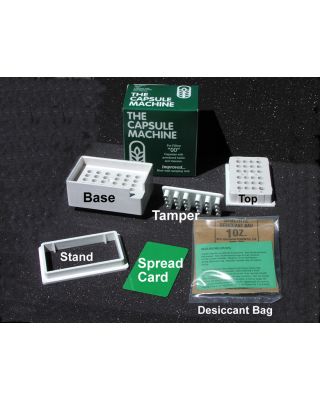
What Makes The Capsule Machine a Popular Manual Capsule Filler?
The Capsule Machine distinguishes itself through its durable ABS construction, precision-engineered molds, and intuitive design, enabling the production of up to 400 capsules per hour with consistent dosing. Its compact footprint and clear assembly instructions have made it a favorite among health-conscious consumers and small businesses alike. Explore The Capsule Machine for a cost-effective entry point into capsule production.
How Do Empty Capsules Complement Your Capsule Filling Machine?
Empty capsules, available in gelatin, HPMC, and pullulan shells, integrate seamlessly with most machines and offer:
- Compatibility: Designed to fit standard 000–5 tooling sets.
- Material Options: Gelatin for general applications, HPMC for vegan formulations, and pullulan for enhanced moisture protection.
- Bulk Packaging: Available in counts ranging from 100 to 100,000 per lot to match various batch sizes.
Pairing the correct capsule type with your machine ensures optimal fill quality and process efficiency as you explore emerging innovations.
What Are the Latest Trends and Innovations in Capsule Filling Machines?
Innovations in capsule filling equipment are primarily focused on enhancing automation, improving precision dosing, integrating data management, and developing novel capsule materials that drive efficiency and unlock new formulation possibilities. These trends reflect the evolving demands of nutraceutical and pharmaceutical manufacturers.
How Is Automation Improving Precision and Efficiency?
Advanced automation features, such as servo-driven dosing discs, programmable tamping pins, and real-time fill-weight sensors, significantly boost accuracy to ±0.05 mg and reduce waste by up to 15 percent. Integrated HMI controls and data-logging modules enable traceable batch records and predictive maintenance alerts, thereby elevating overall production reliability.
What New Capsule Materials and Fill Types Are Emerging?
Emerging capsule shells and advanced fill technologies are expanding formulation versatility:
- Pullulan Capsules: Offer a superior barrier against moisture, ideal for sensitive active ingredients.
- Plant-Based HPMC Shells: Provide vegan certification along with stable dissolution profiles.
- Micro-Emulsion Liquid Filling: Enables enhanced bioavailability for oil-soluble ingredients.
- Nanoparticle-Enhanced Powders: Improve flow characteristics and uniformity in high-precision applications.
Adopting these advanced materials and methods positions your operation at the forefront of encapsulation technology, leading to a confident final decision.
Making Your Final Decision
Selecting the right capsule filling machine ultimately depends on aligning your production volume, material types, capsule formats, budget, and compliance requirements. By carefully evaluating manual, semi-automatic, and automatic options against key metrics like throughput, accuracy, and durability, you can pinpoint the model that maximizes your return on investment and ensures regulatory adherence. Explore Capsule Connection’s comprehensive range of machines, parts, and empty capsules to discover a tailored solution that empowers your supplement or pharmaceutical production with confidence.