Small-Scale Capsule Filling Machines: What You Need to Know

Bring professional-grade supplement creation right into your home or small business with custom encapsulation, bypassing the need for costly industrial equipment. Small-scale capsule filling machines empower health enthusiasts and boutique supplement creators to precisely blend powders and oils, delivering significant cost savings, unparalleled customization, and complete control over every ingredient in your batches. This comprehensive guide will illuminate why these machines are essential, explore manual and semi-automatic options, compare gelatin and HPMC capsules, detail filling techniques for both powders and liquids, and outline key considerations before you buy. By the end, you’ll be equipped to choose the perfect capsule filler and capsules, streamline your production with vital accessories, and navigate regulatory requirements—all while accessing top-tier solutions from Capsule Connection.
Why Opt for Small-Scale Capsule Filling Solutions?
Unlock Cost Savings and Customization with Small-Scale Capsule Filling
Small-scale capsule filling dramatically cuts per-unit expenses by allowing direct sourcing of raw materials and eliminating third-party manufacturing markups. Producing your own formulations removes minimum order quantities and enables precise dosage adjustments for unique blends.
Key advantages include:
- Reduced costs per batch when buying powders and empty capsules in bulk.
- Personalized formulations tailored to specific wellness objectives.
- Swift recipe adjustments without waiting on external suppliers.
These financial benefits and customization capabilities drive agile product development and tighter budget management.
Elevate Quality Control and Freshness with Small-Scale Capsule Filling
Filling capsules in-house provides direct oversight of ingredient quality, precise fill accuracy, and optimal storage conditions to maintain potency. On-demand encapsulation minimizes exposure to oxygen and humidity, preventing the degradation that can occur during large-scale production.
Essential control measures:
- Thoroughly inspect all raw materials before each filling session.
- Operate within a meticulously clean environment to minimize contamination risks.
- Encapsulate just prior to distribution to ensure peak freshness.
Implementing these practices upholds regulatory standards and ensures consistent customer satisfaction.
Who Benefits Most from Small-Scale Capsule Filling Machines?
Small-scale capsule fillers are ideal for a wide range of users who value precision and flexibility:
- Health-conscious individuals creating personalized supplement regimens.
- Nutraceutical startups testing and validating new market products.
- Holistic pharmaceutical practitioners developing custom blends for their clients.
- Boutique brands transitioning from initial samples to small-scale production runs.
Exploring the Range of Small-Scale Capsule Filling Machines
How Manual Capsule Fillers Operate and Their Key Advantages

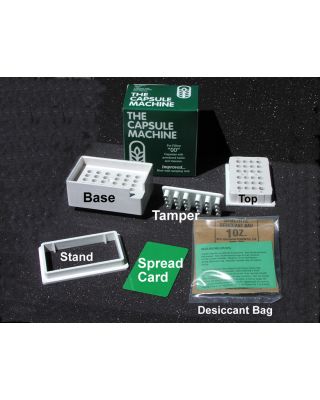
Manual capsule fillers, such as the renowned The Capsule Machine, utilize a plate-and-lid system to perfectly align capsule halves for manual powder or granule filling. Each cycle, typically with 24 wells, ensures uniform filling before capping.
Benefits of manual operation:
- Affordable entry point with minimal maintenance requirements.
- Compact and portable design, ideal for limited spaces.
- Direct, tactile control over fill density and material handling.
Manual fillers are perfect for batch sizes under 500 capsules and allow for immediate recipe changes without the need for power.
When to Consider Semi-Automatic Capsule Filling Machines
Semi-automatic fillers incorporate motorized tamping and alignment features, significantly boosting throughput to thousands of pharmaceutical capsules per hour. They employ vibration and rotation for consistent compaction and faster processing cycles.
Opt for semi-automatic models when:
- Your monthly output consistently exceeds 1 million capsules.
- Achieving precise weight control is a critical requirement.
- The labor savings justify the higher initial investment.
This level of automation offers a practical bridge between the simplicity of manual operation and the efficiency of full-scale production.
Key Features to Compare: Manual vs. Semi-Automatic Machines
| Machine Type | Approximate Output per Hour | Typical Investment Range | User Skill Level |
|---|---|---|---|
| Manual Filler | Up to 8500 capsules | $18 – $5900 | Low; no power required |
| Semi-Automatic Filler | 9,000 – 20,000 capsules | $10,000 – $20,000 | Moderate; calibration needed |
Selecting the Ideal Empty Capsules for Your Small-Scale Filling Projects
Understanding the Differences: Gelatin vs. HPMC Capsules
Gelatin and HPMC (vegetarian) capsules differ in their source materials, moisture sensitivity, and suitability for specific ingredients.
PB Leiner, Benefits of gelatin in pharmaceutical applications (2024)
| Capsule Material | Source Origin | Moisture Tolerance | Optimal Applications |
|---|---|---|---|
| Gelatin | Animal-derived collagen | Lower; prone to moisture absorption | Standard vitamins, common herbal powders |
| HPMC | Plant-derived cellulose | Higher; resistant to moisture | Vegan formulas, oils, probiotics, heat-sensitive ingredients |
Echemi, Why Choose HPMC Capsules for Your Product: HPMC Capsules Benefits and Considerations (2023)
Choosing the Best Capsule Sizes for Your Formulations
Capsule sizes range from 000 (largest) down to 5 (smallest), with capacities designed to accommodate various dosage needs:
- Size 000: Holds approximately 900 mg, ideal for high-dose formulations.
- Size 00: Commonly used for multivitamins, holding around 600 mg.
- Size 0: A versatile size for herbs, typically holding about 500 mg.
- Size 1: Suitable for potent extracts, with a capacity of roughly 400 mg.
SED Pharma, Capsule Size Chart: Choosing the Right Capsule Size (2020)
Are There Specific Capsules for Liquid Capsule Filling?
Hard-shell capsules engineered for oils and suspensions are available, often paired with specialized kits to prevent leakage. HPMC shells generally offer superior performance for liquid formulations.
Key considerations for liquid filling:
- Utilize capsules specifically treated for reduced leakage.
- Dispense liquids using a calibrated micro-pipette for accuracy.
- Apply a sealing solution to the capsule joint and allow to dry on racks.
Hard capsules designed for liquids enable the effective delivery of essential oils and high-fat extracts, potentially enhancing bioavailability.
Mastering the Art of Filling with Small-Scale Capsule Filling Machines
Optimal Techniques for Powder Capsule Filling
Achieving uniform powder encapsulation requires techniques that ensure consistent weight and prevent ingredient separation:
- Evenly distribute the powder across the capsule tray using a spreader card.
- Gently tamp each cavity to the desired density with a dedicated tamper.
- Redistribute any excess powder and tamp a second time for uniformity.
- Securely cap the filled bodies and carefully remove any residual powder.
This methodical approach guarantees accurate dosing and maximizes batch yield, setting the stage for more advanced liquid filling techniques.
How to Perform Liquid Capsule Filling for Small Batches

Liquid filling involves meticulous dosing and sealing to encapsulate oils or liquids within hard shells:
- Securely position the empty capsule bodies in the filling tray.
- Dispense the liquid into each capsule cavity using a micro-pipette.
- Carefully cap the capsules and apply a sealing solution to the joint.
- Transfer the sealed capsules to a drying rack to set properly.
Controlled filling and drying processes result in stable, leak-proof capsules ideal for nutraceutical oils and suspensions.
Essential Accessories for Efficient Capsule Filling
Optimizing your small-scale encapsulation process relies on having the right tools:
- Tamping tools for effectively compacting powders.
- Spreader cards for leveling the fill material evenly.
- Drying racks specifically designed for liquid-filled capsules.
- Cleaning brushes and organized storage trays to maintain hygiene.
Key Considerations Before Purchasing a Small-Scale Capsule Filling Machine
How Production Volume and Scalability Influence Your Machine Choice
Carefully assess your current and anticipated production volumes to select a machine that aligns with your growth trajectory:
- For output under 500 capsules per run, a manual filler is typically sufficient.
- If you produce 1,000–5,000 capsules per hour, a semi-automatic machine is recommended.
- For volumes exceeding 5,000 capsules per hour, consider advanced semi-automatic or commercial-grade units.
Matching equipment capacity to demand ensures cost-effective scaling and prevents the need for premature upgrades.
Why Material Compatibility and Hygiene Are Crucial in Capsule Filling Machines
Your equipment should be constructed from food-grade stainless steel or BPA-free plastics and allow for complete disassembly for thorough cleaning. This is vital to prevent cross-contamination and adhere to regulatory standards.
Essential hygiene practices:
- Disassemble and sanitize trays after every batch.
- Use separate, dedicated tools for handling oils versus powders.
- Regularly inspect all seals and joints for integrity.
These diligent practices guarantee product safety and build consumer trust.
How Ease of Use and Customer Support Impact Your Decision
A user-friendly design, complete with clear instructions and responsive vendor support, minimizes downtime and reduces training requirements. Access to spare parts and reliable troubleshooting guides ensures uninterrupted production.
Evaluate vendor support services carefully:
- Look for comprehensive manuals featuring clear visuals.
- Check for available video tutorials and product demonstrations.
- Ensure prompt customer service for parts inquiries and technical assistance.
Robust support networks are fundamental to maintaining reliable encapsulation workflows.
Navigating Regulatory Considerations for Small-Scale Capsule Filling
Understanding Basic GMP Principles for Home and Small Business Production
Adopting fundamental Good Manufacturing Practices (GMP) is key to ensuring product quality and traceability:
- Document all procedures for every stage of production.
- Maintain a clean production environment with controlled access.
- Keep detailed batch records, including materials used and weights recorded.
ASI Food Safety, Current Good Manufacturing Practice (cGMP) for Dietary Supplements (2023)
How FDA Guidelines Affect Small-Scale Supplement Manufacturing
The FDA’s current Good Manufacturing Practices (cGMP) regulations for dietary supplements encompass equipment validation, sanitation protocols, and labeling accuracy.
- Verify the identity and purity of all ingredients.
- Ensure all equipment is properly calibrated and sanitized.
- Provide accurate labeling, including necessary disclaimers and lot numbers.
Familiarity with these regulations ensures your small-scale operations align with federal standards.
How Capsule Connection Ensures Compliance and Safety
Capsule Connection sources its capsules exclusively from FDA-registered facilities and offers machines constructed with certified food-grade components. Our signature The Capsule Machine features a hygienic design and comes with detailed cleaning protocols, empowering you to produce safe, compliant capsules with confidence every time.
Scaling Production for Small Businesses with Small-Scale Capsule Filling Machines
Cost-Effective Solutions for Small Batch Production
A strategic balance between manual and semi-automatic methods can optimize both costs and operational flexibility:
- Utilize manual fillers for initial research and development and pilot runs.
- Employ semi-automatic machines for consistent subscription orders or seasonal batch production.
- Purchase raw materials and empty capsules in larger quantities to further reduce per-unit costs.
This phased approach effectively aligns your capital expenditure with your production demands.
How Manual Capsule Fillers Support Nutraceutical and Pharmaceutical Needs
Manual fillers are instrumental in the rapid prototyping of clinical trial formulas and high-potency compounds within controlled environments:
- Facilitate custom compounding in pharmacy settings.
- Enable small-batch encapsulation of botanical extracts.
- Support research and development testing for novel active ingredients.
Their portability and precision make them indispensable tools for specialized applications.
Tips for Maintaining and Enhancing Your Capsule Filling Equipment
Consistent maintenance and the strategic use of accessories can significantly extend equipment lifespan and boost overall efficiency.
Essential maintenance checklist:
- Lubricate moving parts according to manufacturer recommendations.
- Replace gasket seals and any worn components annually.
- Thoroughly sanitize all trays after each use.
Key accessories to consider:
- Extra tamping tools to facilitate parallel processing workflows.
- Color-coded trays to prevent accidental cross-contamination between batches.
- A precision digital scale for accurate pre-weighing of fills.
Routine care and the smart selection of accessories are crucial for ensuring reliable, high-quality pharmaceutical encapsulation results.
Small-scale capsule filling machines open the door to professional supplement production at accessible price points, fostering innovation, enhancing quality control, and enabling scalable growth for health-focused individuals and businesses alike.

Related Products